Three years after On Purpose: With Oliver Matikainen

Written by Oliver Matikainen
Published: 01 Apr 2026
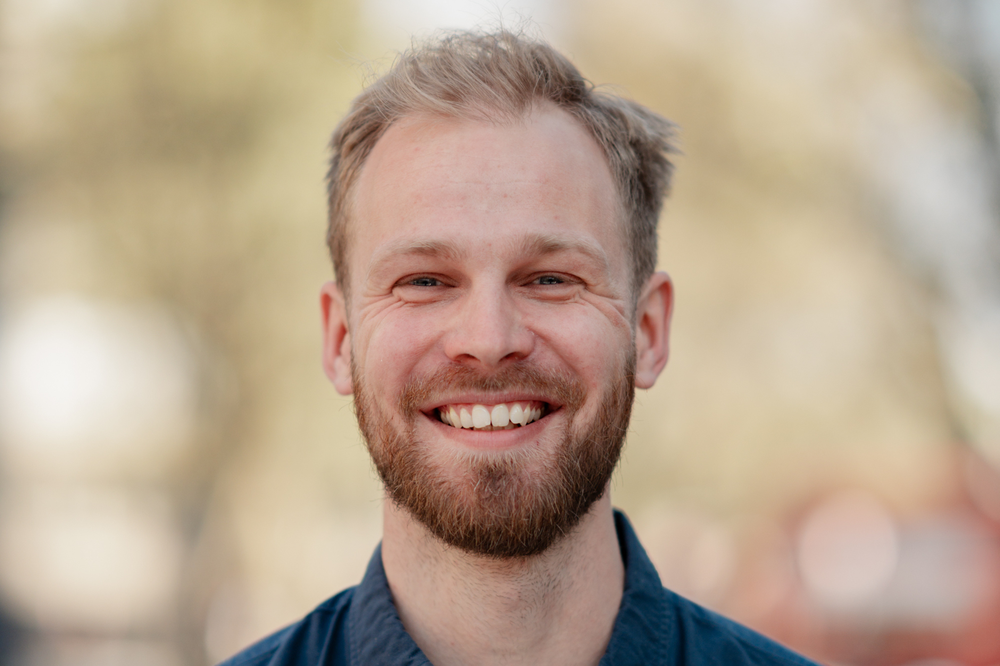
Can you tell us about your background and your career prior to On Purpose?
I’m originally from Denmark and moved to London shortly before joining On Purpose. My background is interdisciplinary and international - I studied across philosophy, science, and sustainable development - and my early roles reflected that. I worked at the intersection of sustainability and education, including guest lecturing at Uppsala University and doing educational research for UNESCO.
Right before the Associate Programme, I was actually working at a small independent grocery shop in Bermondsey. I’d just moved to London and needed some stability after a failed consultancy role that was almost a comically bad match for me. It was a great way to get settled, but after a few months I was ready for the next step - which turned out to be the Associate Programme.
Why did you join the On Purpose Associate Programme?
Values were the biggest driver for me. I’ve always wanted my work to feel useful and aligned with making a positive impact, rather than chasing salary or titles. On Purpose really spoke to that - both in the types of organisations involved and in how the programme creates space for learning and reflection. I hoped it would help me get a clear sense of where I could put my skills to best use. And it did.
Community was the other big reason. For me, community is a key part of living a good life, and I’d just moved to London without knowing anyone. The idea of joining a cohort of like-minded people felt really important. That sense of community absolutely delivered - our cohort of 20 is still close three years later.
It's been three years since you completed the Associate Programme. What are you doing now?
I’m a Senior Learning Designer at Apolitical, the world’s largest network for public servants, with over half a million members worldwide. I joined straight after finishing the Associate Programme three years ago and have been there ever since, working on the Government Energy and Climate Campus.
My role involves designing learning with leading institutions like Oxford University, the World Resources Institute and government partners across the world. I also help shape the direction of the campus which includes figuring out what topics we cover, what formats we use, and which regions we focus on to make the learning as impactful as possible.
Can you tell us more about your placements?
My first placement was at Oddbox, where I worked as a Customer Insights Manager. I led a research project - collecting, analysing, and presenting data to inform company decisions - and also supported project management for launching a new saladbox.
My second placement was at King’s College London as a Student Transition Manager. I looked at postgraduate students’ experiences, from starting their degree to what happened afterwards, and explored why some students took breaks or dropped out. The goal was to identify and prioritise interventions that could better support them.
What’s the most important thing you learnt during your year as an Associate?
I learned that I’m capable of doing many different kinds of roles, and that I had lots of transferable skills I could bring into new positions. The programme gave me a justified confidence - built from real experience I gained at my placements - that I could step into roles I might not have considered before.
It also helped me get much clearer on what kind of work I enjoyed (and didn’t enjoy) and where I could add the most value. That clarity made a big difference when applying for jobs afterwards, because I could articulate both what I wanted and what I was good at.
What support did you get along the way?
There was lots of formal, helpful support built into the programme - coaching, mentoring, and the Friday training sessions.
But for me, the biggest support was the cohort. That became an informal support network we built ourselves, within the space On Purpose had created.
My cohort is wise, insightful, supportive and fun - often even more so because of the range of perspectives. We spoke about the things we found difficult as well as sharing the things we enjoyed. We talked about work but also life beyond work, which created a strong sense of belonging. That made it easier to have honest conversations and have fun - often moving between deep reflection and being completely silly. I’m still very close to quite a few people in my cohort and I feel very fortunate to call them my friends.
How did you approach finding a job after the programme?
Because the Associate Programme gave me so much clarity in what I wanted to do, I was very selective. I decided to apply only for jobs I genuinely wanted, rather than sending out lots of applications. In the end, I applied for just two roles and got the second one.
Being clear on my priorities - and confident enough to stick to them - made the whole process more focused and, I think, more effective.
What do you miss about your old career, and what don’t you miss?
Since my master's, I've been surrounded by lots of wonderful people with an infectious passion for and incredible depth of knowledge of the topics that are close to my heart. I miss every one of them and the energy we had as groups.
What I don’t miss is the lack of stability that came with lots of fixed-term contracts earlier in my career. One of my goals in joining On Purpose was to find more long-term direction, and I’m really grateful to now be in a role where I’ve been able to stay, grow, and develop over several years.
What advice would you give to others in a similar situation?
When you’re considering a big change, you always have a clear idea of what you’re giving up, but not of what you might gain. That uncertainty can make change feel riskier than it really is.
In my experience, when I’ve felt compelled to make a change and followed through on it, it’s always been worth it. Of course, this depends on having the privilege to be able to take those chances. But if you do, using that opportunity to move towards more meaningful work can be incredibly rewarding.
Written by Oliver Matikainen
Published: 01 Apr 2026