Where are they now? 6 months after On Purpose with Rhea Patel

Written by Rhea Patel
Published: 05 Mar 2026
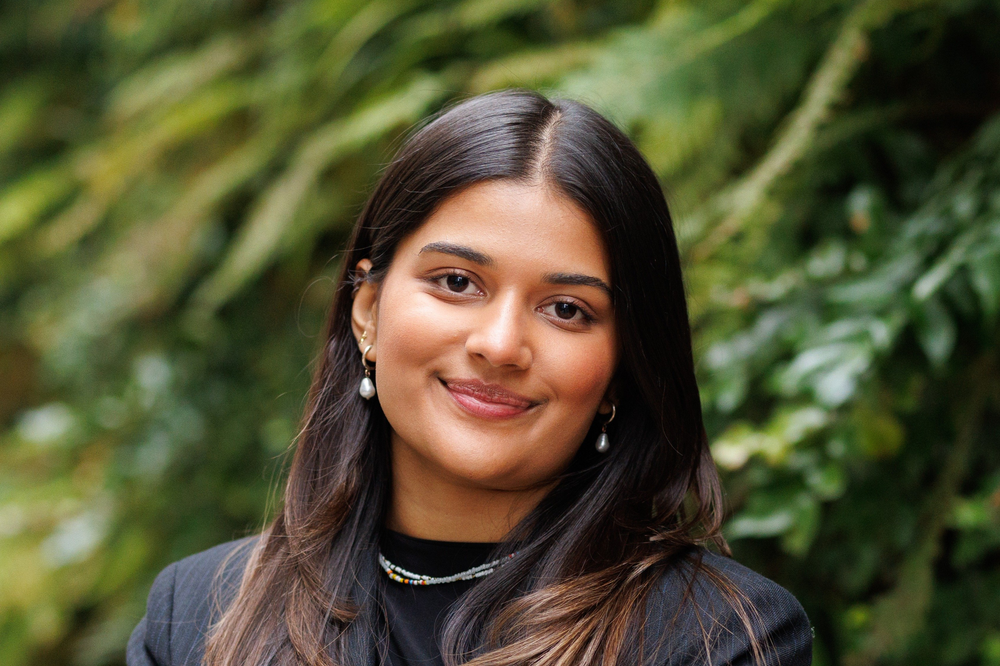
Can you tell us about your background and your career prior to On Purpose?
I started my career in marketing at a local med-tech company, working on creative projects like magazine design and events. After about a year, I took a break and went to Tanzania to volunteer as an English teacher. That experience was a turning point - I became more aware of the issues around voluntourism, left the original programme, and started working with a local organisation instead. When I returned to the UK, I continued fundraising for them on a voluntary basis.
I then moved into employer branding, helping organisations attract future talent. I loved the work and even launched a podcast to support young people starting their careers. But I was always trying to bring a social impact angle into roles that were mainly focused on sales and delivery. At the same time, I was developing a microfinance idea to support single mothers in Tanzania with small business loans. Realising I was happy to spend all my free time on impact work - but didn’t feel the same about my day job - was the moment I knew I wanted to make a bigger shift.
Why did you join the On Purpose Associate Programme?
I actually found On Purpose by Googling “jobs with purpose”! I knew I wanted to work in impact but had no idea what those roles looked like. The programme felt perfect because I could learn, try two placements, and explore the impact sector without committing to a single job I wasn’t sure about.
At the time, a part of me was still wondering if I’d made the right decision leaving my old career. On Purpose felt like a safety net - a structured way to explore while keeping options open. I was drawn to the Friday training sessions, the learning & development support and the network and community. The cohort actually ended up being my favourite part, even though I didn’t realise how important that would be at the start.
It's been six months since you completed the Associate Programme. What are you doing now?
I’m currently balancing two things. The first is a programme I co-developed with a local NGO in Tanzania called the Girls Advancement Pathway (GAP). It’s a six-month programme supporting girls in the gap between finishing school and moving on to further opportunity - a period when many are at higher risk of early marriage, pregnancy, or dropping out of education. GAP follows a bespoke curriculum we’ve designed to equip girls with the skills and tools to make autonomous life decisions. After On Purpose, I spent several months fundraising to get the programme off the ground.
Alongside that, I now work as a Grants Manager at The Dulverton Trust, an independent family foundation that’s been running for over 75 years. I didn’t have direct grants experience before, so it’s a completely new skill set. I actually found the role through someone I’d met at an event during my placement.
Can you tell us more about your placements?
My first placement was at the Department for Culture, Media and Sport (DCMS) in the Volunteering Strategy team. I worked on a research paper which explored how the UK Government could better support community-led action. I interviewed organisations across the sector and developed recommendations for how government could engage with local communities. It was a fascinating insight into policymaking.
My second placement was at NatWest Social & Community Capital, a social lender. The team was small and the role was remote, which was an adjustment at first but worked out brilliantly. My main project was creating the organisation’s annual impact report, combining analytical and creative skills. The experience in social finance has been especially helpful in my current grants role.
What’s the most important thing you learnt during your year as an Associate?
How important it is to surround yourself with people who think differently but share similar values and ambitions. Being in a cohort with people from diverse backgrounds, ages, and careers - but all motivated by impact - was incredibly energising. I suddenly had a group of people I could share ideas with who genuinely understood and cared, which I hadn’t realised I was missing before.
What support did you get along the way?
The mentoring and coaching were super helpful. My first mentor, a business leader turned impact investor, was amazing for big-picture thinking and has actually gone on to support GAP as a funder. My second mentor, an On Purpose Fellow who works at a large charity, helped me navigate day-to-day placement challenges.
My coach was particularly useful when thinking about life after the programme - what I wanted to do and how I could get there.
The On Purpose team and joining the team and cohort every Friday training also created a supportive, reflective space, and my cohort actually became one of my biggest support systems. Whether you had a great week or a tough week, we would all be there for each other, which is very special.
How did you approach finding a job after the programme?
I started by getting clear on what I didn’t want and which skills I wanted and needed to build. I decided to focus on roles like programme - or grants management, rather than marketing and comms, because I wanted to grow in new areas.
I did a lot of networking too - messaging people on LinkedIn, asking for advice, and learning about different organisations. I tried to avoid heavily advertised roles with thousands of applicants and instead focused on opportunities that came through conversations and smaller networks. In the end, I found my current role at The Dulverton Trust through someone I’d previously met as an Associate.
What do you miss about your old career, and what don’t you miss?
I sometimes miss the confidence of really knowing what I was doing and feeling highly competent in my role. Starting again in new sectors has meant rebuilding that from scratch. I also miss the cross-sector mix of my old work.
But I don’t miss feeling like I was constantly trying to squeeze social impact into a role where it wasn’t the priority. Now, impact is the core purpose of the work, which feels much more aligned and motivating.
What advice would you give to others in a similar situation?
Don’t see the Associate Programme as the career shift, but as a bridge for exploration. It’s a chance to test, learn, and reflect, which takes a lot of pressure off.
There’s often fear around moving into the impact space - about salaries, burnout, or progression - but the sector is far more varied than people think. You don’t have to choose between ambition and impact. It’s possible to build a fulfilling, progressive career while doing meaningful work, and sometimes the most interesting careers come from zigzagging rather than climbing one straight ladder.
Written by Rhea Patel
Published: 05 Mar 2026