Where cities lead, climate action follows: Inside C40's global network


Written by Pauline Eloi & Lucy O'Meara
Updated: 18 Feb 2026
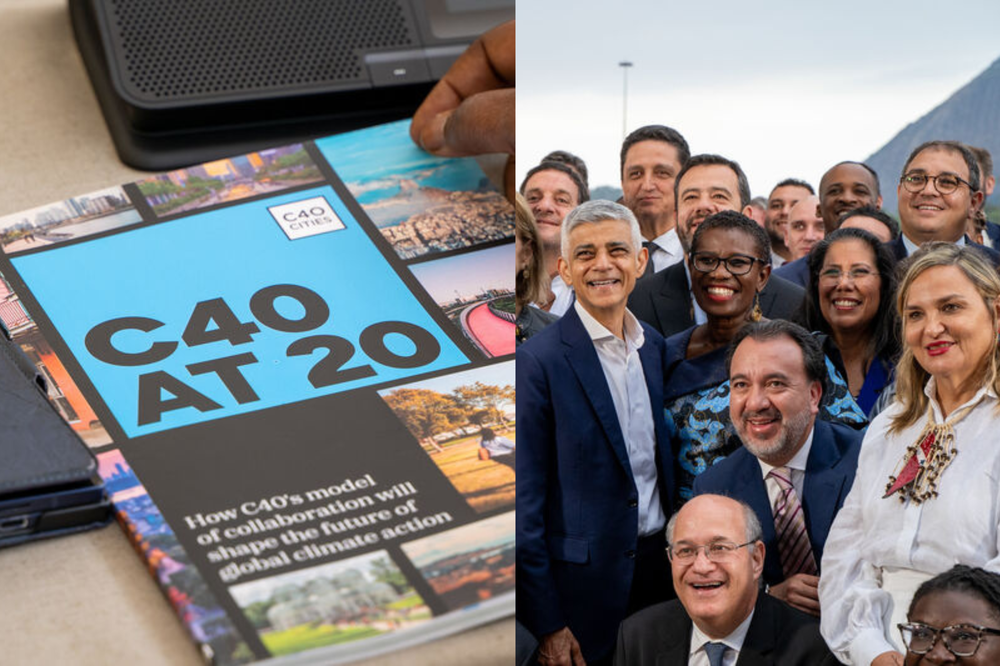
What does it take for cities to lead the fight against the climate crisis?
In this interview, we speak with On Purpose Fellow Pauline Eloi, Director of the Executive Office at C40 Cities, a global network of nearly 100 mayors committed to confronting the climate crisis. From strengthening funder partnerships to supporting city-led innovation, Pauline reflects on the power of collaboration and the real-world impact of mayoral leadership - including initiatives that tackle air pollution, urban heat and emissions at scale.
We also speak with On Purpose Fellow Lucy O'Meara about her placement with C40, where she supported the World Mayors Summit in Rio, and helped establish a major new climate action grant in Brazil. Lucy shares what it takes to turn global ambition into coordinated, city-level action - and why cities remain one of the most hopeful arenas for meaningful change.
Pauline, how would you describe C40 Cities’ purpose?
C40 is a network of nearly 100 mayors of the world’s leading cities working to deliver the urgent action needed right now to confront the climate crisis and create a future where everyone, everywhere, can thrive. Mayors of C40 cities are committed to using a science-based and people-focused approach to limit global heating in line with the Paris Agreement and build healthy, equitable and resilient communities.
As an organisation, we offer programmes through which cities connect to learn from each others’ successes and challenges on key topics such as transport, waste, energy, etc. At C40, I’m the Director of the Executive Office, in charge of our Executive Director’s private office, Board relations and funder partnerships. Reading case studies of actions C40 cities are taking reinforces my commitment each day - Lucy mentions a few of these further down. I took the full measure of the impact of our work a few months after joining C40: after winning our Women4Climate Tech challenge, a young female entrepreneur could partner with the City of Paris to provide plant infrastructures to tackle urban heat islands, combat air pollution and support urban wildlife.
Lucy, what was your role during your placement with C40 Cities?
My work was really varied, from strategic reporting to C40 funders to relationships with external partners, through programme management and monitoring & evaluation. It was wonderful to work with C40 colleagues worldwide on everything I did!
One major project was C40’s triennial World Mayors Summit, held in Rio de Janeiro in November 2025. Nita Robertson, the Associate at C40 before me, had worked on defining the Summit’s narrative and outcomes, and I then helped to shape the Summit’s agenda. This included planning how to showcase the climate actions that C40’s teams are supporting cities to achieve, like improving air quality and embedding walkability, cutting freight emissions, or promoting sustainable food systems. I learned so much about actions that cities in the C40 network are taking to make people’s lives greener, cooler, and healthier.
I also worked with an extraordinarily inspiring team of colleagues in France, South Africa, Colombia and Brazil to set up a major new grant for climate action in 50+ cities in Brazil. I led on recruiting 22 new posts for this work, helped shape the governance structure, and worked with our international partners on the grant to get our agreements with them up and running.
Pauline, tell us about some of the organisations & people you work with
I’m extremely privileged to have a position that connects me with most teams across C40, and therefore across the world. C40’s culture is truly collaborative and respectful of everyone’s expertise and input, and so attracts extremely dedicated and talented people, like our Associates Lucy and Nita. Everyone is driven and we don’t only share a passion for the work we do, we also have loads of discussions on how our personal choices can be part of creating a greener, fairer future.
The main people we work with at C40 are mayors and city officials. They’re our raison d’etre and are our utmost priority in every decision we make. In my role specifically, I mainly exchange with our Board Directors and our funders - primarily philanthropic organisations. They all have tremendous leadership experience and bring varied perspectives that are complementary, or sometimes provide a healthy dose of challenge.
Lucy, what's something you're proud of achieving during your time with C40 Cities? What makes you particularly proud of this achievement?
I’m really proud of the work I did to set up the Brazil grant. It’s a huge project to accelerate climate action in Latin America’s most populous country, with a focus on transport decarbonisation, waste methane reduction, climate action planning and climate finance. The program will lead to a data platform presenting emissions and risk data for all 5,570 Brazilian cities. It’ll support Amazon cities to make their first climate action plans, and link up 20 high-action waste and transport actions nationally to finance pathways. We hope this program will provide a model for city-focused climate action in other countries.
We named it the ‘Mutirão Program’, using a Portuguese word, originally from the Tupi-Guarani language, meaning ‘collective efforts’ - modeling multi-level partnerships, where all levels of government work in a coordinated way with NGOs and civil society to tackle interconnected challenges.
Pauline, what's something you're proud of achieving since joining C40 Cities? What makes you particularly proud of this achievement?
My role is a few steps removed from the direct work we do with cities on policies and projects that truly change people’s lives. So I can’t claim to have directly contributed to a new waste management system or to have shifted the urban design of a neighbourhood like some of our colleagues do. However, over the past six or so years, I have developed a fantastic relationship with our largest funders. I speak to them nearly on a daily basis and our work together goes beyond a simple grant agreement: my counterparts in those organisations are thought partners who help us shape C40’s strategy and deal with our challenges.
Thanks to these trusting relationships, we’ve designed programmes that have extended our reach tenfold and secured many additional funding partners. We’ve recently secured our largest ever grant from one of them, supporting critical areas of our operations and programs, and I like to think that the way I expanded C40’s relationship with these organisations contributed to this enough to make a difference.
Lucy, how has working with C40 Cities shaped your understanding of what it takes to create change?
More than half of the world’s population lives in cities, and cities account for the majority of global emissions - but they’re also where climate solutions have maximum impact. Working with C40 during my placement and afterwards during my consultancy work with them showed me how cities can lead the way in driving positive change. Think of London’s Clean Air Zone. Since its introduction (by C40’s Co-Chair, Mayor Sadiq Khan), air quality across the city has improved, with toxic levels of nitrogen dioxide down by 27%.
Mayors are taking on society’s biggest challenges. They can spearhead positive change for millions of people when they’re empowered by governance structures, popular mandate, and funding. I’ve learned a huge amount about how meaningful climate action happens, and what needs to come together behind the scenes, from finance advocacy with multilateral development banks to global diplomacy to communications campaigns to getting funders on board. I’ve also seen what the challenges are - including climate misinformation.
I’ve been inspired, and I’ve been given hope: at a time when climate denialism is growing, C40 cities are cutting per capita emissions five times faster than the global average.
Written by Pauline Eloi & Lucy O'Meara
Updated: 18 Feb 2026