From one city to a national programme: what it takes to scale a social enterprise

Written by Alice Clifford
Published: 24 Sep 2026
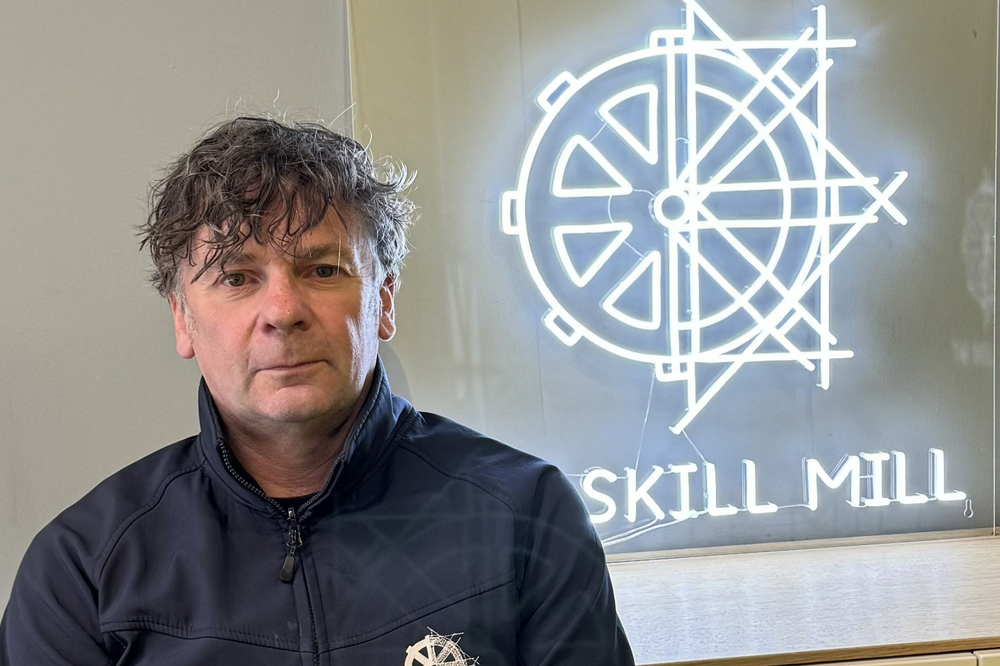
Davie Parks, founder of Skill Mill, has spent a decade building a working solution to youth reoffending into a national programme. In this piece, based on a conversation with Davie, I explore his experience growing a social enterprise and brokering two Social Outcomes Partnerships (SOP) — an innovative funding model where contracts are paid on outcomes rather than delivery — as the government prepares to scale this approach through the £500m Better Futures Fund (BFF).
This piece brings together my two placements as I end my On Purpose year. I started at the youth charity AllChild, where I saw a SOP in practice and helped plan for further outcomes-based funding. I met Davie at this year's SE100 Awards, hosted during my placement at NatWest Social & Community Capital, where Skill Mill won the Social Investment Pioneer Award.
Ahead of BFF opening its round for newcomers to SOPs in Summer 2027, I asked Davie to share his hard-won lessons on scaling a social enterprise, alongside his practical advice for navigating outcomes funding.
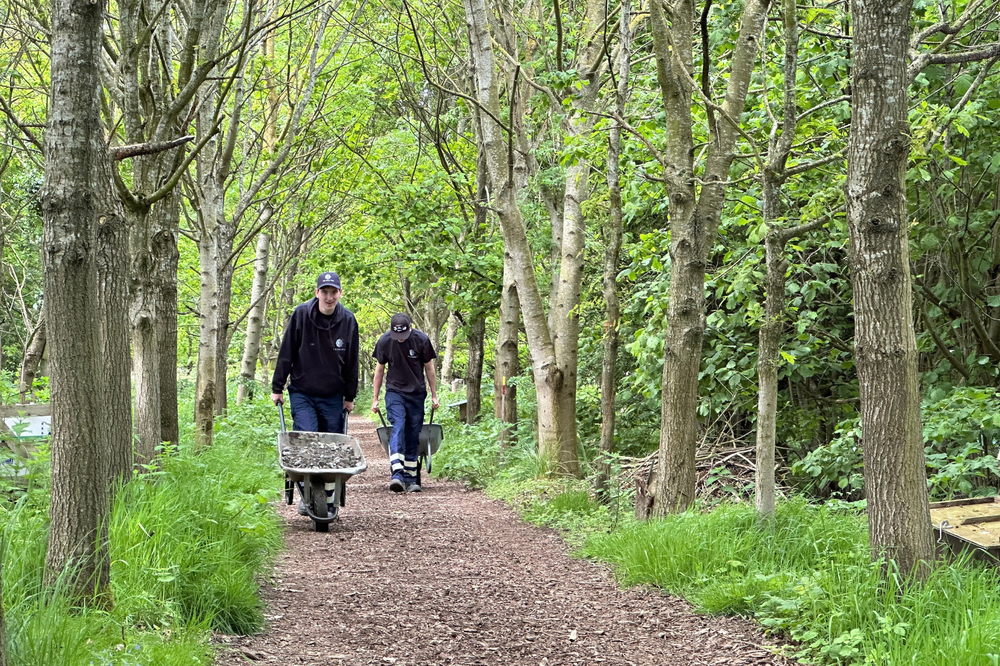
Skill Mill is a social enterprise that employs ex-offenders aged 16-18 on environmental projects. From building fish ladders to transforming brownfield sites, every young person is supported through six months of paid work experience whilst they earn qualifications. Over the last ten years, they have employed more than 450 young people. Fewer than 8% have been re-convicted, against a national rate of 63%.
Those numbers are the reason Skill Mill has grown into a programme running across nearly twenty local authorities in England and Wales, with its latest contract the UK’s largest ever Social Outcomes Partnership by geographic reach.
Creating work for the ‘unemployable’
The idea for Skill Mill emerged whilst Davie was working at Newcastle City Council's Youth Offending Service. He set out to tackle a specific problem: how to find work for young people in the justice system who had been written off as ‘unemployable’.
“The kids say they want work; they’ve always told me that, having worked in justice for 30 years,” says Davie. “They would all like a job, but with their track records it can often feel like a kind of fanciful idea”.
Traditional interventions weren't cutting it. "A social worker sits down talking to a young offender for an hour, and then they walk out the door and potentially nothing changes. There isn't enough incentive to stop them from reoffending. But giving them a job and some money and purpose is."
The council supported the idea but would not act as an employer, so Davie came up with a direct solution – he would set up a company and become the employer himself.
What began as an evenings-and-weekends project snowballed as other cities saw the Newcastle model working, with demand leading to expansion in Liverpool, North Yorkshire and beyond. Across every new location, Davie met young people with strikingly similar experiences – of care, school exclusion and unmet additional needs – and a similar shift in how they saw themselves once they had a uniform to put on and somewhere to be each morning.
It took seven years before Davie could leave his council job to run Skill Mill full time in 2020.
Filling the funding gap
As anyone running a charity or social enterprise knows, having an intervention that works is necessary but far from sufficient. Skill Mill's original funding plan to combine grant income with revenue from selling environmental services did not add up to a sustainable business on its own.
In 2017, Davie was approached about the Life Chances Fund, a £70m government initiative to expand the use of Social Outcomes Partnerships (SOPs), sometimes called social impact bonds.
The basic idea is this: an investor funds an organisation to deliver a service, and government (usually a local authority) pays out only once agreed outcomes are achieved – in Skill Mill's case, things like young people completing the programme and not reoffending. If the outcomes are met, the investor is repaid with a return.
In practice, this shifts financial risk away from government and onto investors. For Skill Mill, it meant being able to price its services more competitively while continuing to expand.
Partnerships are fragile
Skill Mill's first SOP through the Life Chances Fund involved eight locations and had the direct backing of national government. Their second and current SOP was negotiated independently and had three times the number of partners!
If there is one lesson Davie wants other founders to take from Skill Mill’s experience, it's this: any partnership that depends on multiple institutions is only as strong as its least committed member, and that risk grows with every partner added.
Councils that seemed certain to participate withdrew days before signing. Others emerged unexpectedly, eager to take part. Procurement teams and lawyers created delays. Cabinet priorities shifted.
“It requires everybody to be signed up. So when one piece of the jigsaw falls out, it has a massive impact.”
Skill Mill's practical response was to require director-level sign-off on every expression of interest. Whilst this helps, it doesn't fully protect against inevitable personnel changes. Davie's advice for anyone building a multi-partner programme is to secure the most senior sign-off available, and be prepared to make your case more than once.
Skill Mill also brought in specialist support for this larger contract focused on contract design, financial modelling and investor relations. This was provided by Bridges Outcomes Partnerships, a social enterprise specialising in SOPs and a former On Purpose host organisation. Davie is clear he could not have built this partnership alone – his advice to anyone considering an outcomes contract is to budget for that support from the start.
What's an outcome worth?
“The metrics are the metrics. We're still counting the same things we were from the start,” Davie says. What changed with the move to an outcomes contract was not what Skill Mill measures, but how those measurements are priced.
Deciding what each outcome is worth is one of the more difficult aspects of negotiating a contract like this. Commissioners need to be confident the price reflects not just the cost of delivery, but the fiscal and social value each outcome represents to them.
In Skill Mill's contract, the biggest payments are tied to long-term outcomes such as young people moving into full-time employment and not reoffending. But Davie is clear that much of the effort – and arguably most of the value – sits much earlier in the journey: getting young people to turn up consistently and gain their qualifications. Everything that follows depends on those foundations.
This gap, between where the effort goes and where payment is triggered, is worth understanding before signing any contract of this kind. The investor carries the cash-flow risk, but Skill Mill still has to deliver the long-term outcomes that unlock the largest payments, which can mean adapting the programme along the way.
A means to an end, not the end goal
Skill Mill's current SOP includes a randomised control trial paid for by the Youth Endowment Fund. This is a notable step for an organisation that already knows its model works. The goal of the trial is to produce robust evidence to take to the Ministry of Justice and Home Office that the programme works across a wide range of different environments.
"If we were to be locked into outcomes contracts forever, it feels like we've not really made the most of it. Because we've not been able to persuade government to change their funding model."
Davie sees outcomes-based funding as a platform rather than an endpoint. For some organisations, that means expanding a proven model into new areas; for others, it provides the space and credibility to test something genuinely new. In his view, the mechanism works best when it does both at once – backing what is already proven while making room for what is still promising.
The measure that matters most is still the one Davie started with – a young person turning up to a job and on a payroll. Commissioners might have to wait to find out if an outcome has landed, but they only have to wait until payday.
Lessons from Skill Mill
- The problem always comes first.
- A working model still needs a business model.
- Multi-partner deals are only as strong as the least committed partner.
- Know where your effort goes versus what you get credited for.
- Treat evidence as something to spend, not just something to hold.
Want to support Skill Mill’s work?
Skill Mill are currently recruiting two new board members – if you are interested in finding out more, please contact Davie on [email protected].
Please also get in touch if you are interested in commissioning Skill Mill’s services or funding a community project using their teams.
Written by Alice Clifford
Published: 24 Sep 2026